SHOWCASE

/ ARTIST / 2026

BKKIF Artist  
ARTIST: Lenta
COUNTRY/REGION: Thailand
CONTACT: https://www.facebook.com/share/1FJsWCXjxs/
https://www.instagram.com/lenta_journey?igsh=MXVsaW1pMGJsY3FhaA==
https://www.pixiv.net/users/88941914
An illustrator inspired by the deep blue ocean and its creatures, bringing the wonder of childhood imagination to life through illustration.

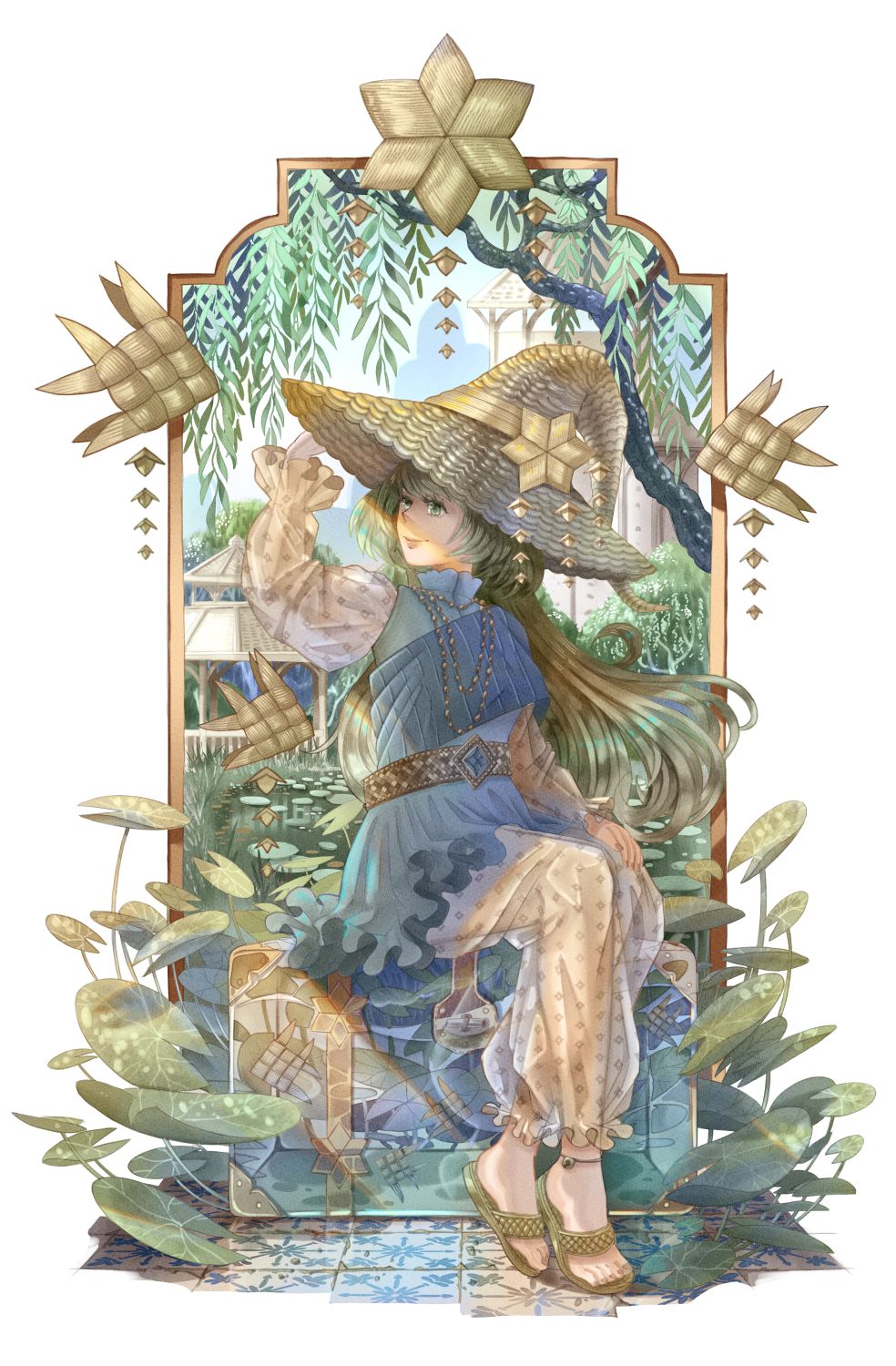
Cirryne, Witch of the Thorn Sea

When I was a child, my father had business trips to Japan. Whenever he came home, he would always bring back little gifts for me soft vinyl kaiju figures, LEGO sets, and all kinds of toys.

One day, however, he handed me something different. It was carefully wrapped in paper and cushioned with a layer of cotton. As I slowly unfolded it, I found a delicate white seashell inside. It was as thin as paper, with gentle ripples across its surface, resembling patterns left in the sand by the wind.

That was the first time I encountered a Paper Nautilus.
Years later, I was captivated once again when I came across photographs of a living Paper Nautilus in a foreign marine life book. It was then that I learned the fragile shell was actually home to an octopus.

It remains one of those small but unforgettable childhood memories, one that quietly nurtured my fascination with the ocean and still holds a special place in my heart.
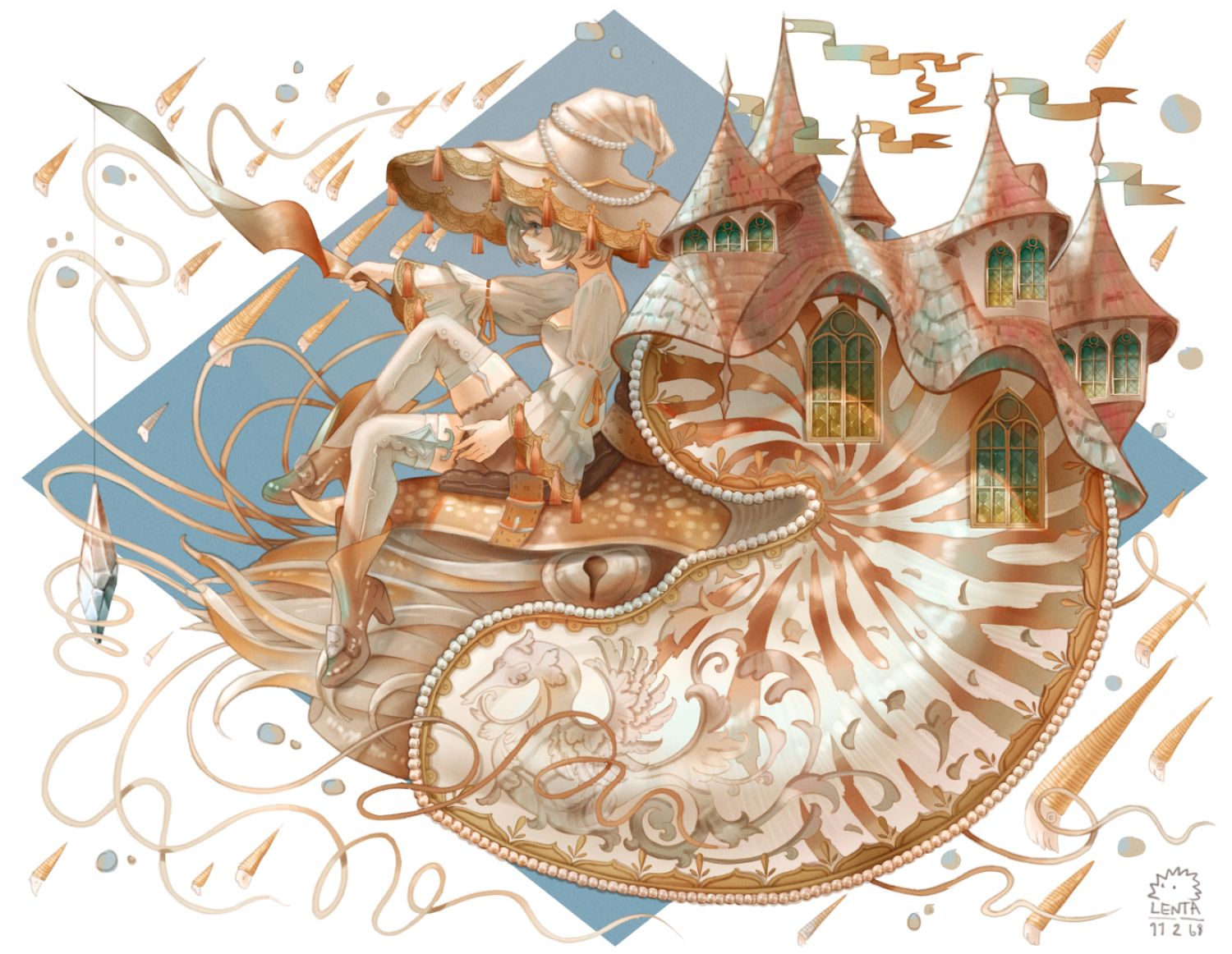
The Floating House of Niley

When I was a kid, back when many child was fascinated by dinosaurs, my family assumed I would be too. So our house ended up with quite a few dinosaur encyclopedias.

Ironically, my favorite pages weren't about dinosaurs at all. I kept coming back to the pages about nautiluses and other strange prehistoric sea creatures. There was just something fascinating about them.

The nautilus, a creature that has dominates the sea for over 400 million years, has always captured my imagination. Even though its heyday has long gone, it is still fascinating today.

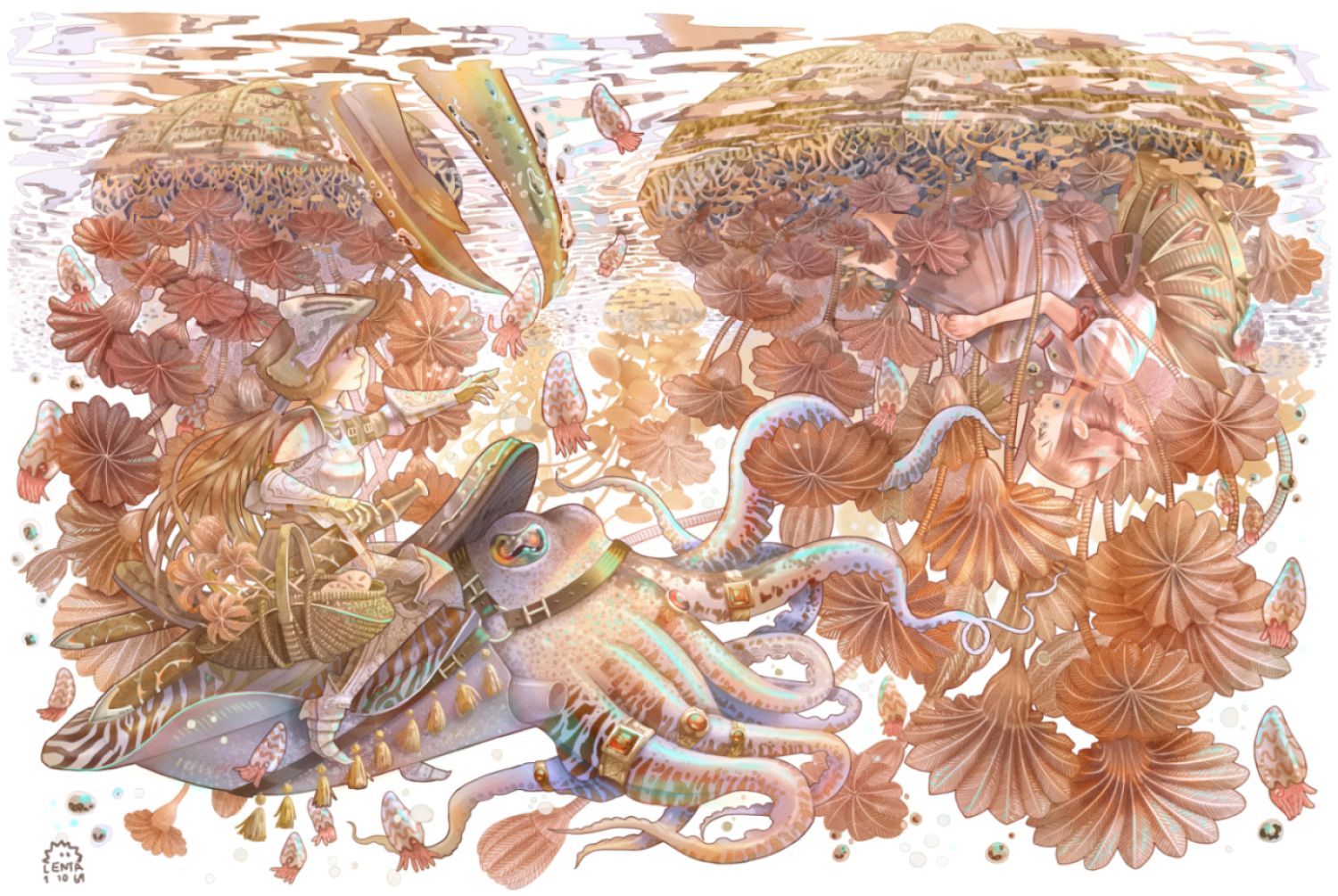
Kraken's Tea Party

I once watched local fishermen hauling up baskets filled with strings of conch shells tied together in long lines. It wasn't until later that I learned these empty shells were actually used to catch small octopuses.

Whenever an octopus discovers an abandoned shell, it instinctively claims it as a shelter. But when the shells are pulled back up from the sea, instead of escaping, the octopus retreats even deeper inside, clinging to what it believes to be safe.
For many of them, it becomes their final refuge.

Thinking about that always sparks my imagination. If these little octopuses were part of a merfolk society, I'm sure they would choose their homes with great care, perhaps a finely glazed teapot, an elegant porcelain vessel, or an even more beautiful shell worthy of calling home.

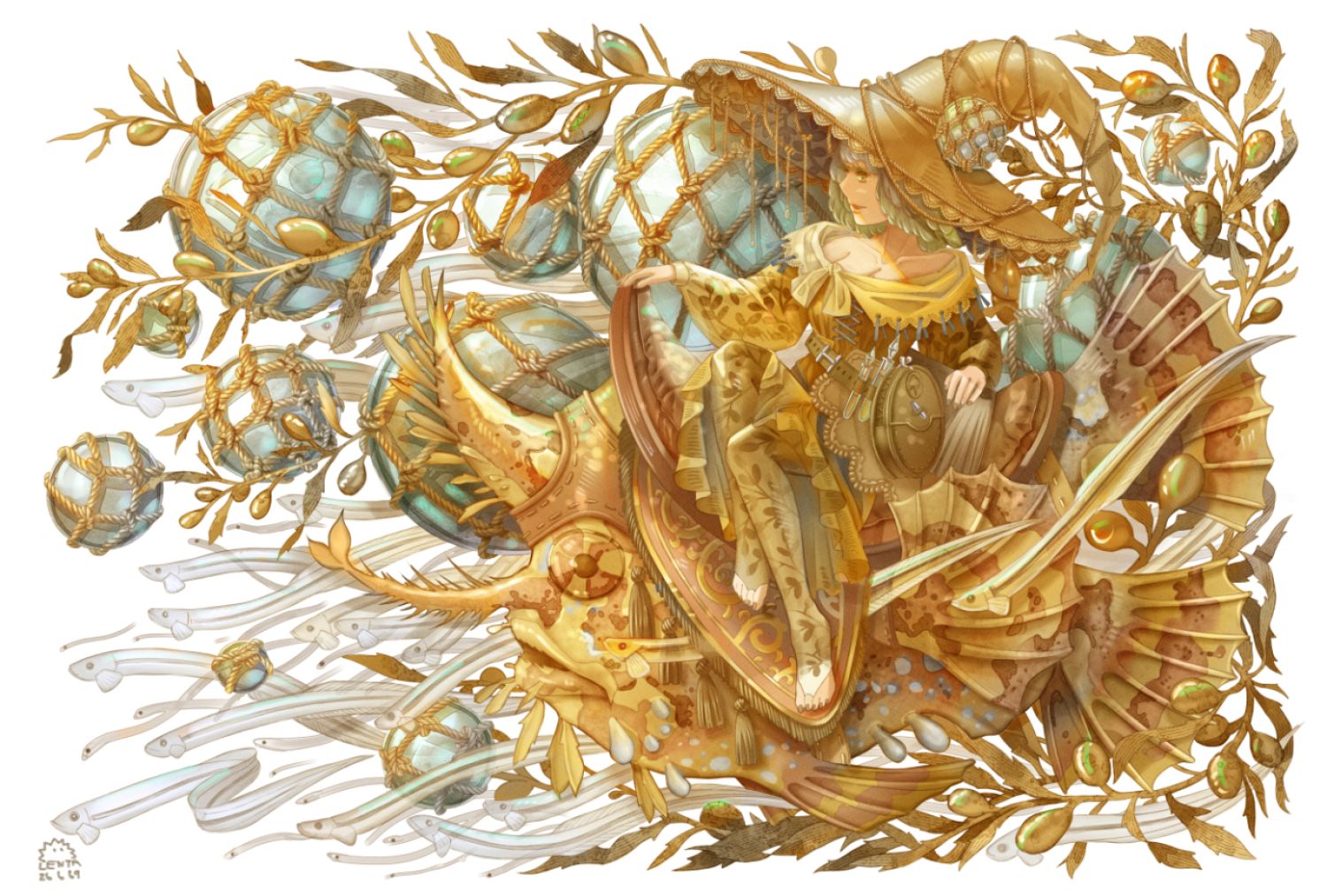
Sagazzi of the Eel Garden

The Sargasso Sea is a unique part of the Atlantic Ocean with no coastline, famous for its floating golden sargassum seaweed.

When I was a kid, I first learned about it from an illustrated children's encyclopedia. It felt like such a beautiful and mysterious place. The star of that book was the Sargassum frogfish, and ever since then, I've wanted to draw one someday.

More recently, I learned that both the European eels and the American eels use the Sargasso Sea as their spawning ground. Much like salmons returning upstream to lay their eggs, these eels leave freshwater and travel more than 5,000 kilometers across the ocean to return to their birthplace. That's why I also wanted to include glass eels the transparent juvenile stage of these two species in this illustration.

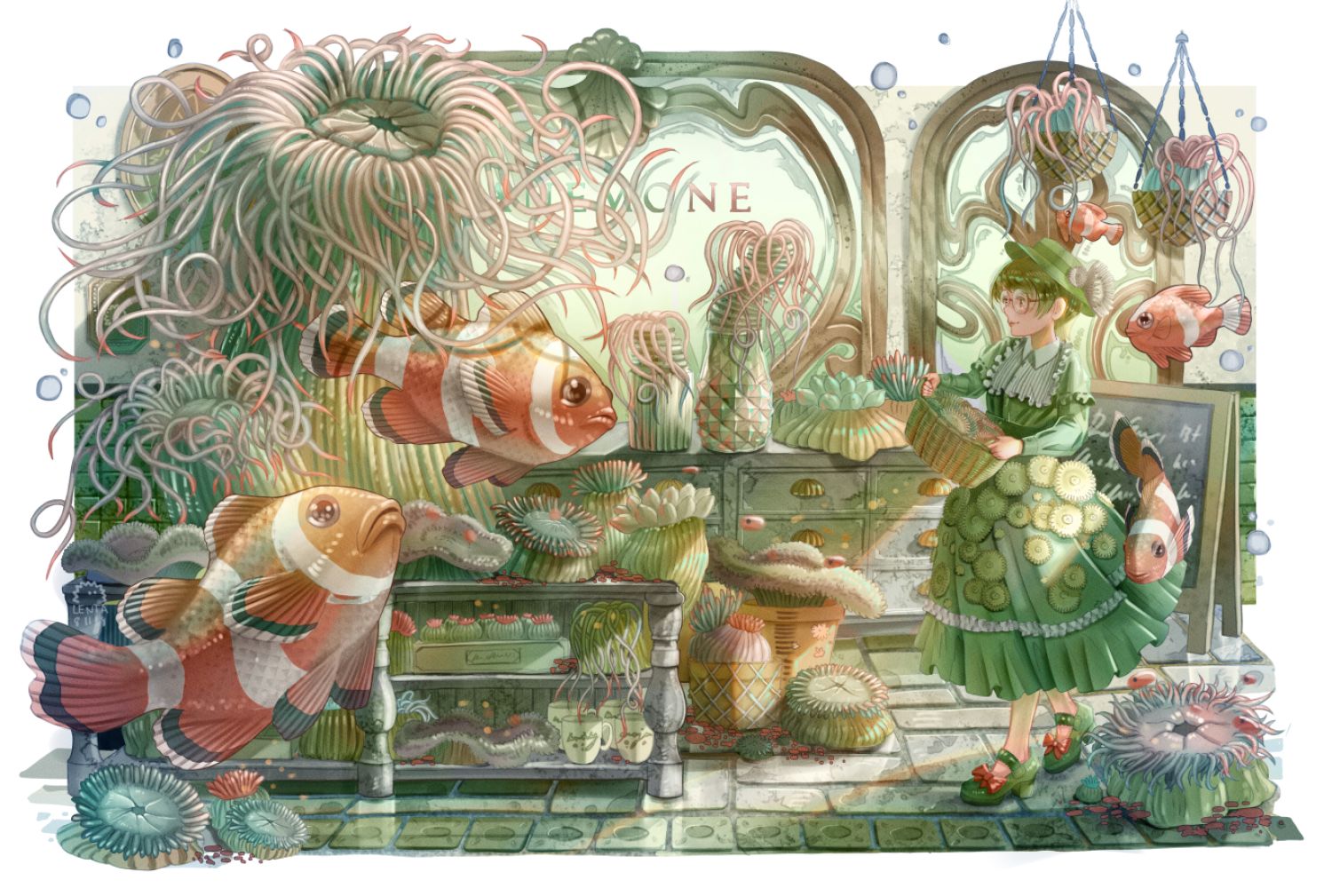
Breeder of Flower

I used to call this fish "the orange-and-white striped clownfish" all the time. Until I heard my nieces and nephews calling it "Nemo", I realized how remarkable it is that a single movie could completely reshape the way so many people recognize an animal.

Unfortunately, here in Thailand, when someone says "Dory," most people are probably more likely to think of the inexpensive white-fleshed freshwater fish than the forgetful little blue tang from the movie.

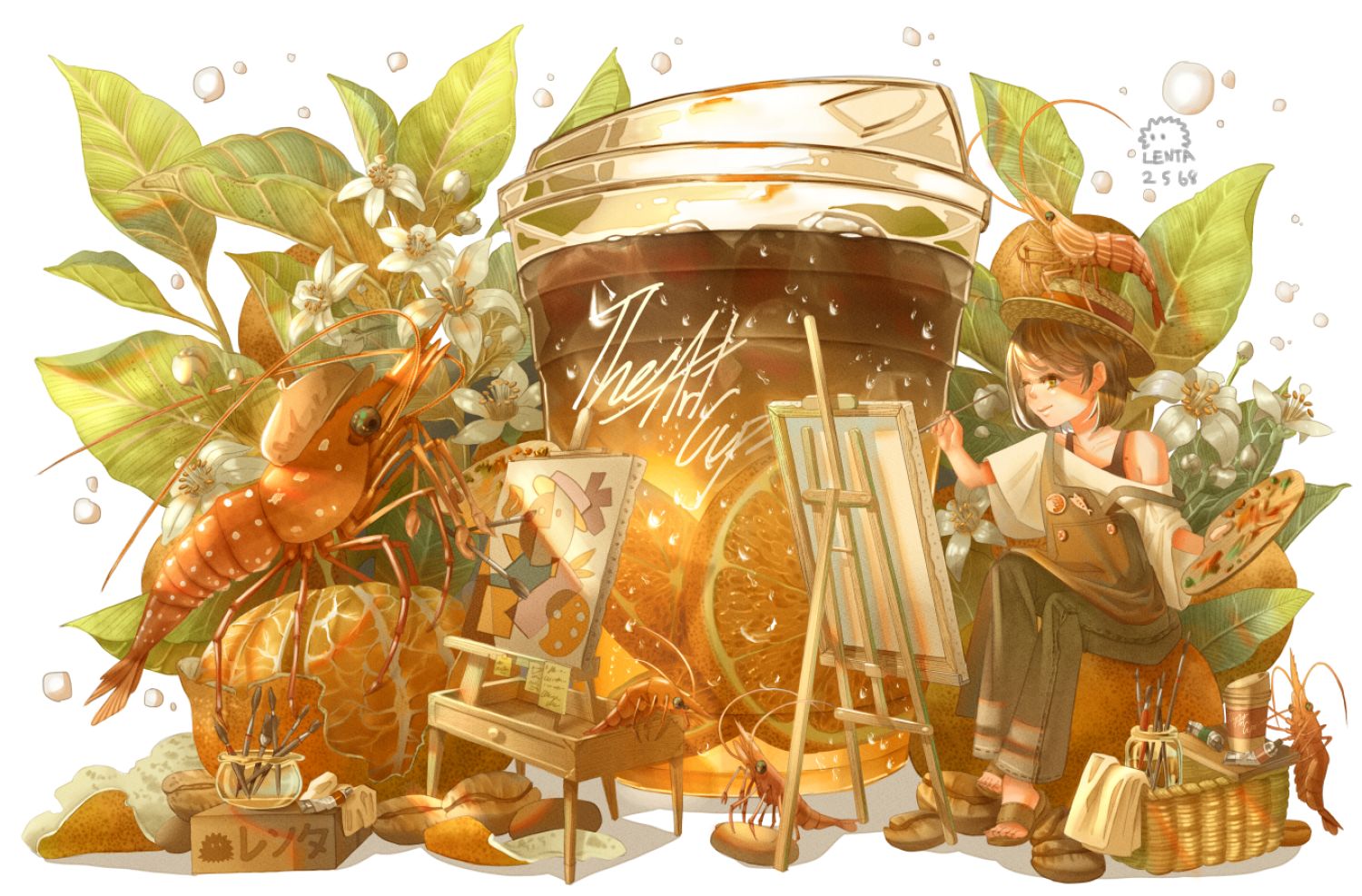
Caffeine & Tangerine

My first cup of coffee was probably when I was around twelve or thirteen. It was a traditional Thai coffee from a local market—brewed unbelievably sweet, poured into a plastic bag packed so tightly with ice that it bulged like a water balloon, then tied with a rubber band so you could carry it around.

I'm not sure if that was the moment I became a coffee person, Since then every cup somehow made me feel just a little more grown-up.

By the time I reached university, coffee had changed from a delicious treat into a mean of survival. Canned coffee became my companion through countless nights, helping me keep my eyes open as I worked on architectural drawings until dawn. It was simply part of student life.

When I started working, I gradually switched to black coffee. It became my way of staying alert, preparing myself for the constant pressure and stress that came with adult life. when I stuck with problems, simply brewing up a fresh cup, placing it beside me, and letting its aroma slowly fill the room often often enough to calm my mind and help me think a little more clearly.

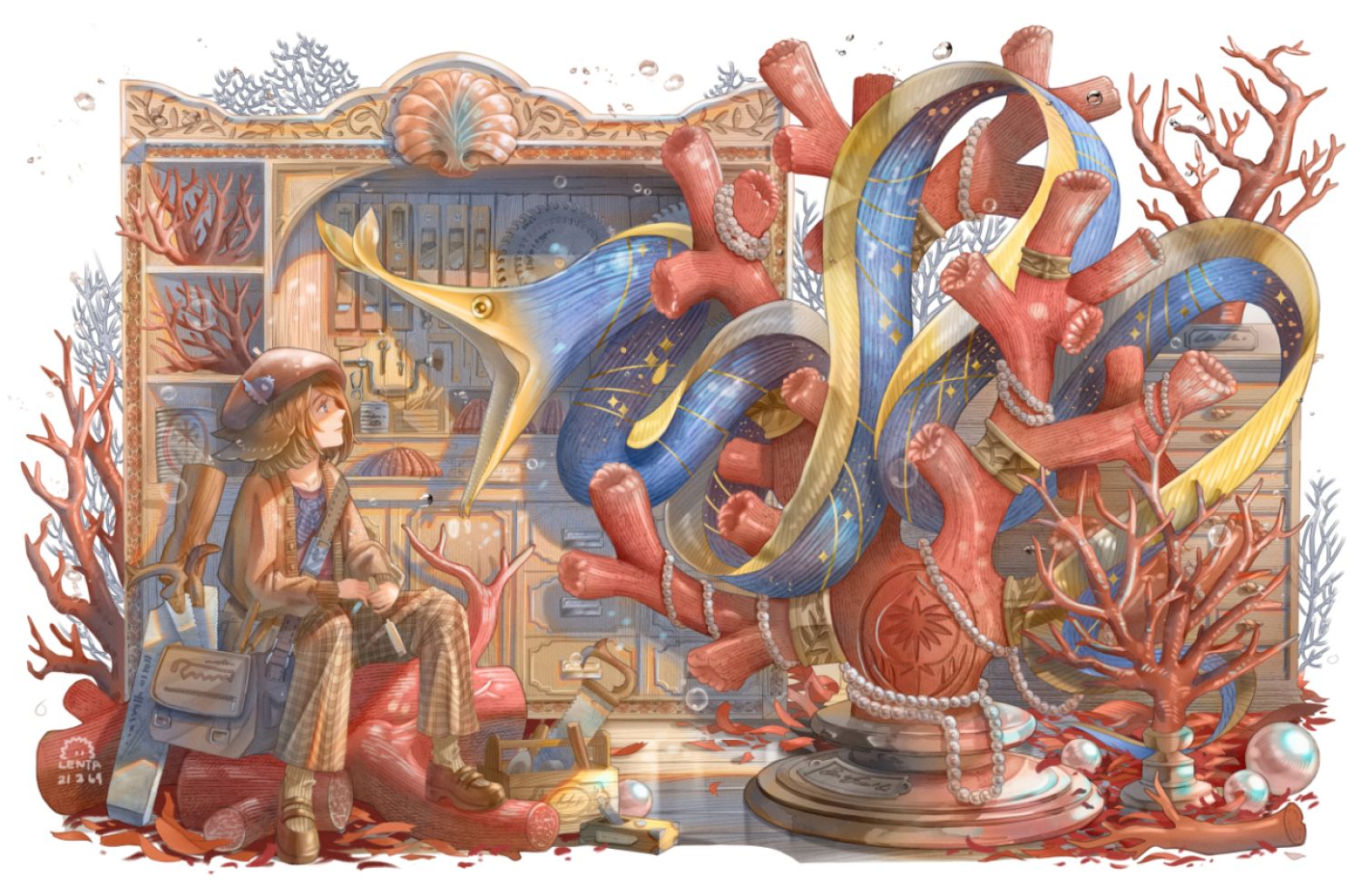
Red Coral & Cobalt blue

I used to think that the color name “Coral Red” came from gorgonian corals with their distinctive red lines. But not long ago, while I was searching for references of jewelry and ocean-themed props, I came across an image of a coral, similar to staghorn coral, polished to a glossy shine like crystal and displayed on a metal stand.

I discovered that the name “Coral Red” actually comes from this very species—the red coral (Corallium rubrum).

Red coral (Corallium rubrum) is a hard coral that lives at depths between 20 and 600 meters in the Mediterranean Sea. Because of its beautiful red color and its ability to be polished to a glossy finish, it has long been harvested for jewelry and decorations. As a result, it is now in a critically endangered state.

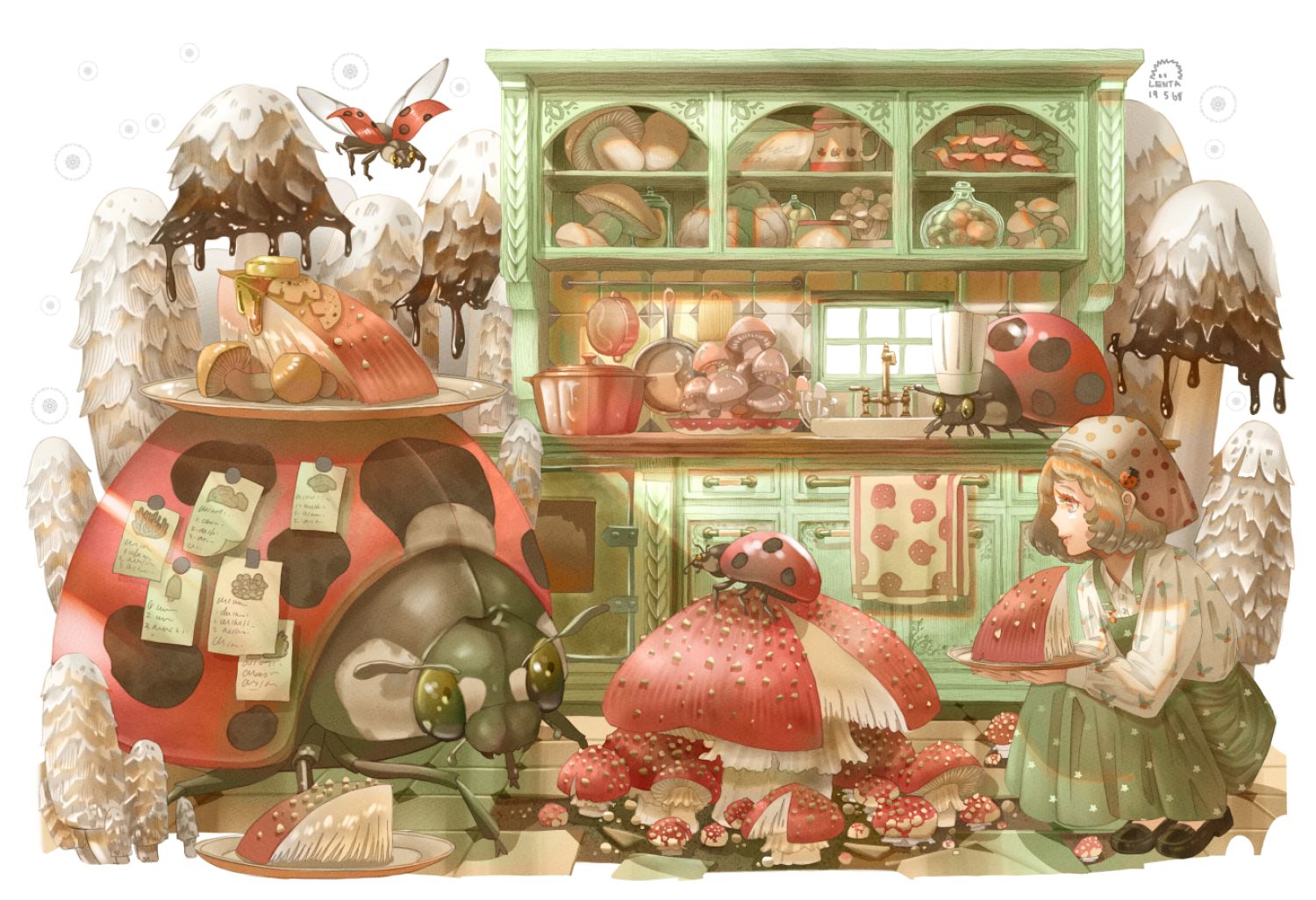
Lady (Bug) and Amanita

Ever since I was a child, whenever I saw illustrations of mushrooms, they were almost always the same iconic one—a bright red mushroom covered with little white spots. It looked so charming and whimsical that it became my mental image of what a mushroom should look like, and it was the one I always tried to draw during childhood.

A few years later, my father bought me an mushrooms encyclopedia. I couldn't read English at the time, but the book used a simple system of symbols that made it easy to tell which mushrooms were edible and which were not.

The most delicious edible mushrooms were marked with a plate accompanied by a knife and fork. Mushrooms that were edible but not particularly prized were shown with a plate crossed by a knife and fork. Poisonous mushrooms, on the other hand, were marked with a plate bearing a bright red skull symbol.

And that adorable little red mushroom with white spots—the one I had always thought of as the quintessential fairy-tale mushroom—was right there in the last category.

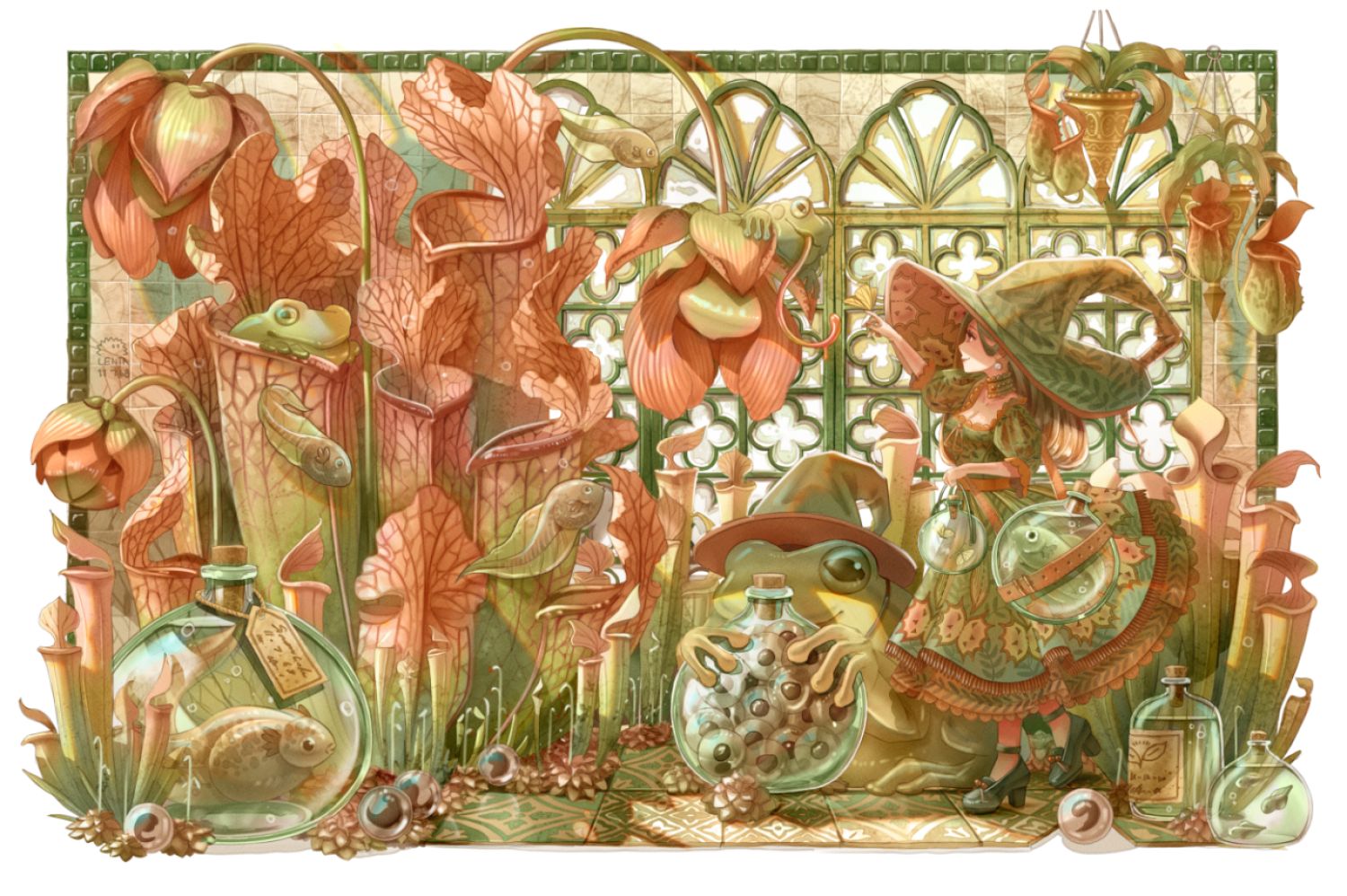
Nursery of the carnivores

Carnivorous plants have always fascinated me. Like most angiosperms, they still rely on insects for pollination, yet they also depend on insects as a source of nutrients.

Sarracenia, in particular, is especially intriguing. Its flowers are every bit as beautiful as its elegant pitcher traps. It almost makes me wonder? does that mean an insect that happens to wander by has a fifty-fifty chance? It might leave carrying pollen or end up becoming lunch instead

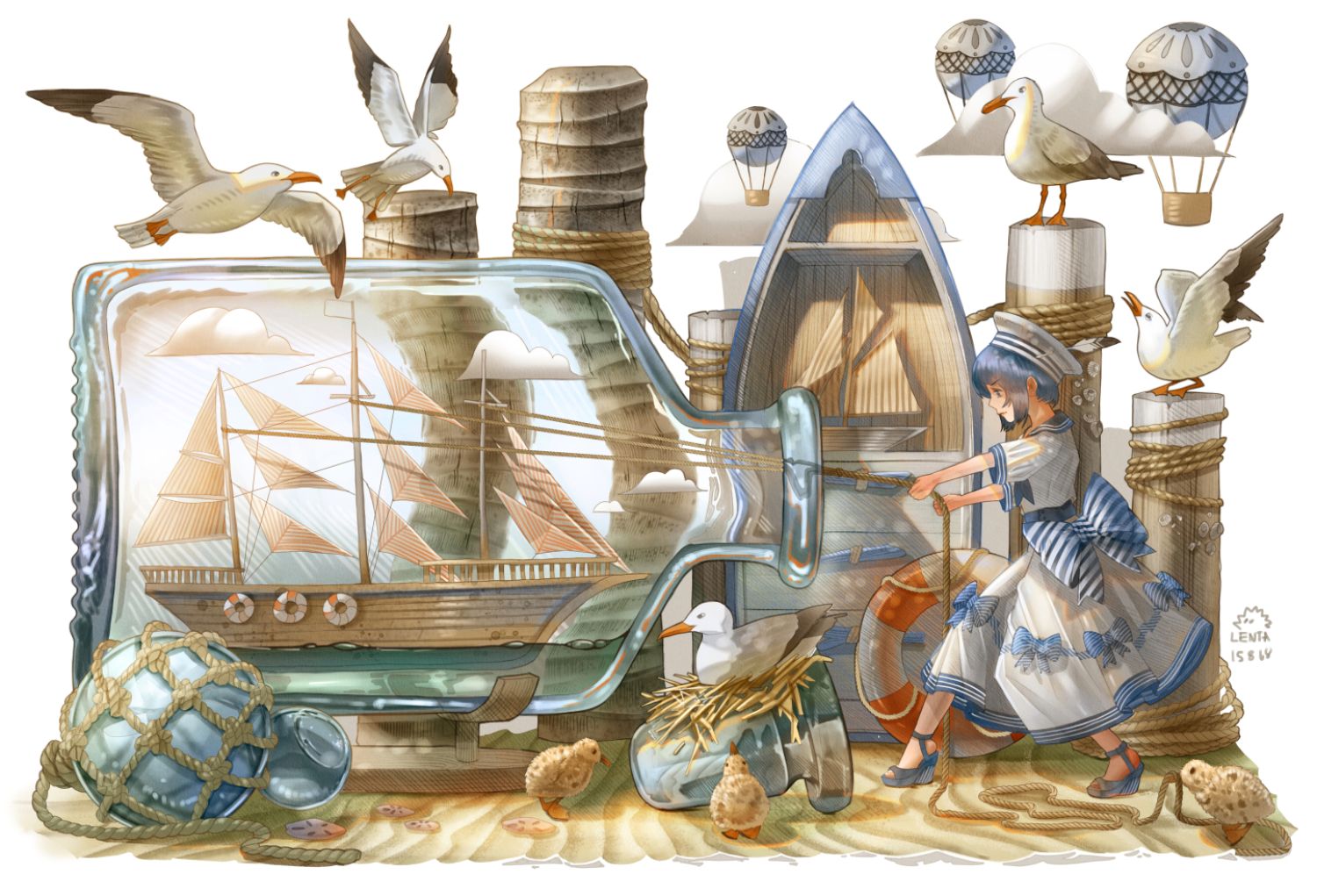
The sailor and her ship in a bottle

When I was a child, whenever my family took me for a road trip, there were only a handful of songs playing in the car. We listened to a few cassette tapes, the same songs would be played over and over again.

One of my favorites was a song about a seagull, flying determinedly toward a distant destination, even though it couldn't yet see where its journey would end.

As a child, I loved the song simply because of its beautiful melody and rhythm. But now, after experiencing a little more of life, I find myself understanding the message the songwriter wanted to share far more deeply than I ever did back then.

BKKIF ARTIST SPECIAL

More Artwork/Merchandise:

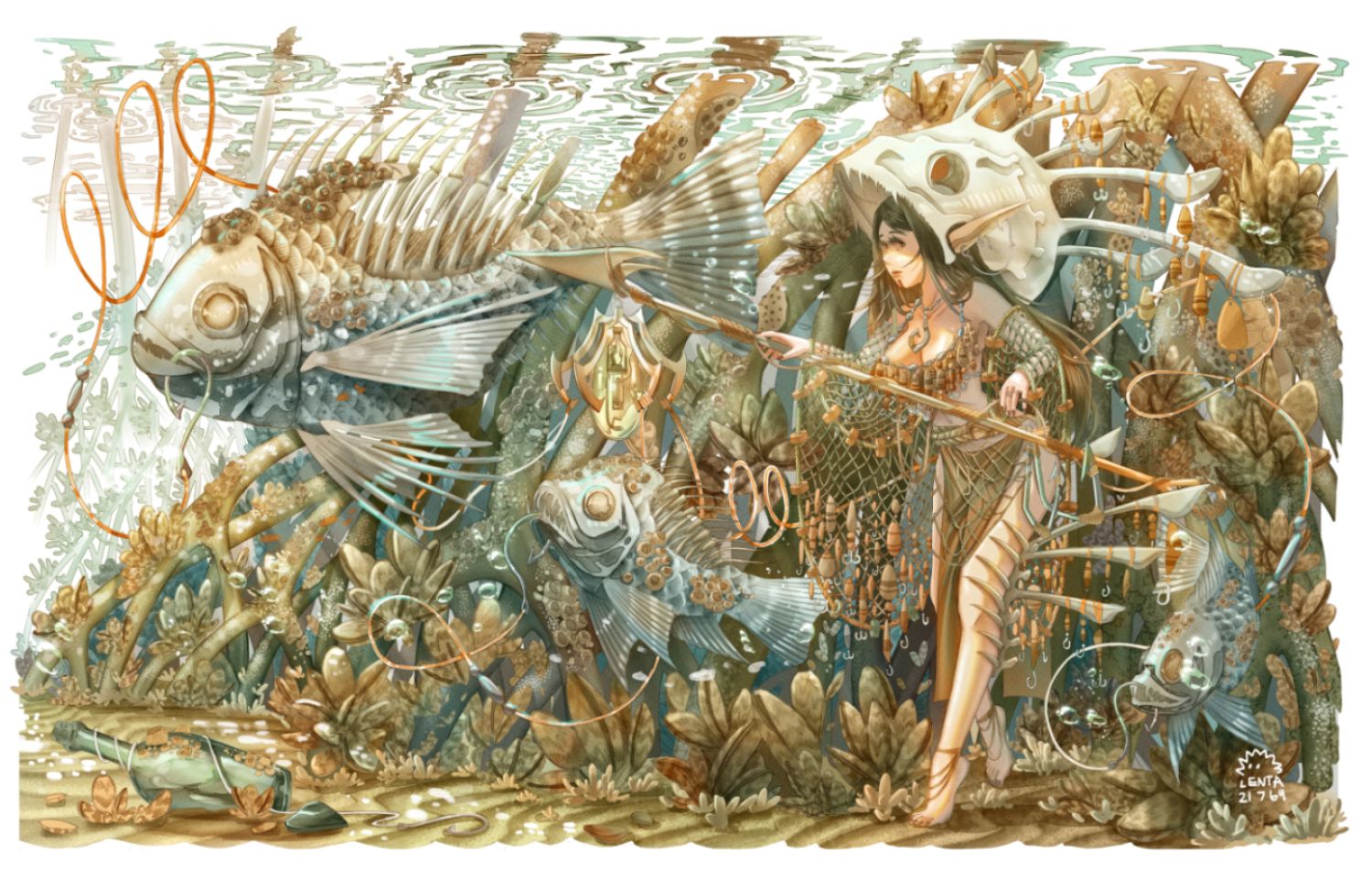
Murmuring from the Mangrove

More than a decade ago, I had the opportunity to visit a marine national park somewhere along Thailand’s eastern coast. One of the highlights of the trip was a nature trail—a long wooden boardwalk stretching deep into the mangrove forest.

At the time, the tide was high and the wind was calm. The late-morning sunlight filtered through the canopy of the mangrove trees, casting shimmering reflections across the forest below. The water was so clear that I could easily see the creatures living beneath the surface: schools of tiny fish of various species, along with countless snails and other mollusks clinging to the tangled mangrove roots.

It was a beautiful and unforgettable encounter with nature, and the memory has remained with me ever since.

Many years later, I returned to the same place. As expected, the environment had changed with time. Parts of the wooden walkway had begun to deteriorate, and some sections of the handrails had rotted away.

But what caught my attention most was a strange-looking fish that kept surfacing to gulp air. Some were as large as two palms held together, while others were tiny, measuring less than ten centimeters in length. They swam together in large groups, and I found their presence quite unusual.

I have always been particularly interested in aquatic animals, and I had visited this mangrove forest several times before. Yet I had never seen this particular kind of fish there. What surprised me even more was their sheer abundance. Wherever I looked, there seemed to be groups of them swimming around almost everywhere.

At the time, all I could think was:

“What kind of fish are these?”

Little did I know that, years later, these fish would become one of the most serious and difficult-to-solve ecological problems facing the ecosystem today.

A Voyage to the Far East

In my old bedroom, there used to be a small pla taphian mobile hanging on a shelf above the door. I think I bought it as a souvenir—though I can’t remember where from anymore. It’s really just a personal habit of mine: I like collecting little objects with interesting shapes or a cute charm. Sadly, after moving to a new room, that tiny fish mobile seems to have disappeared somewhere.

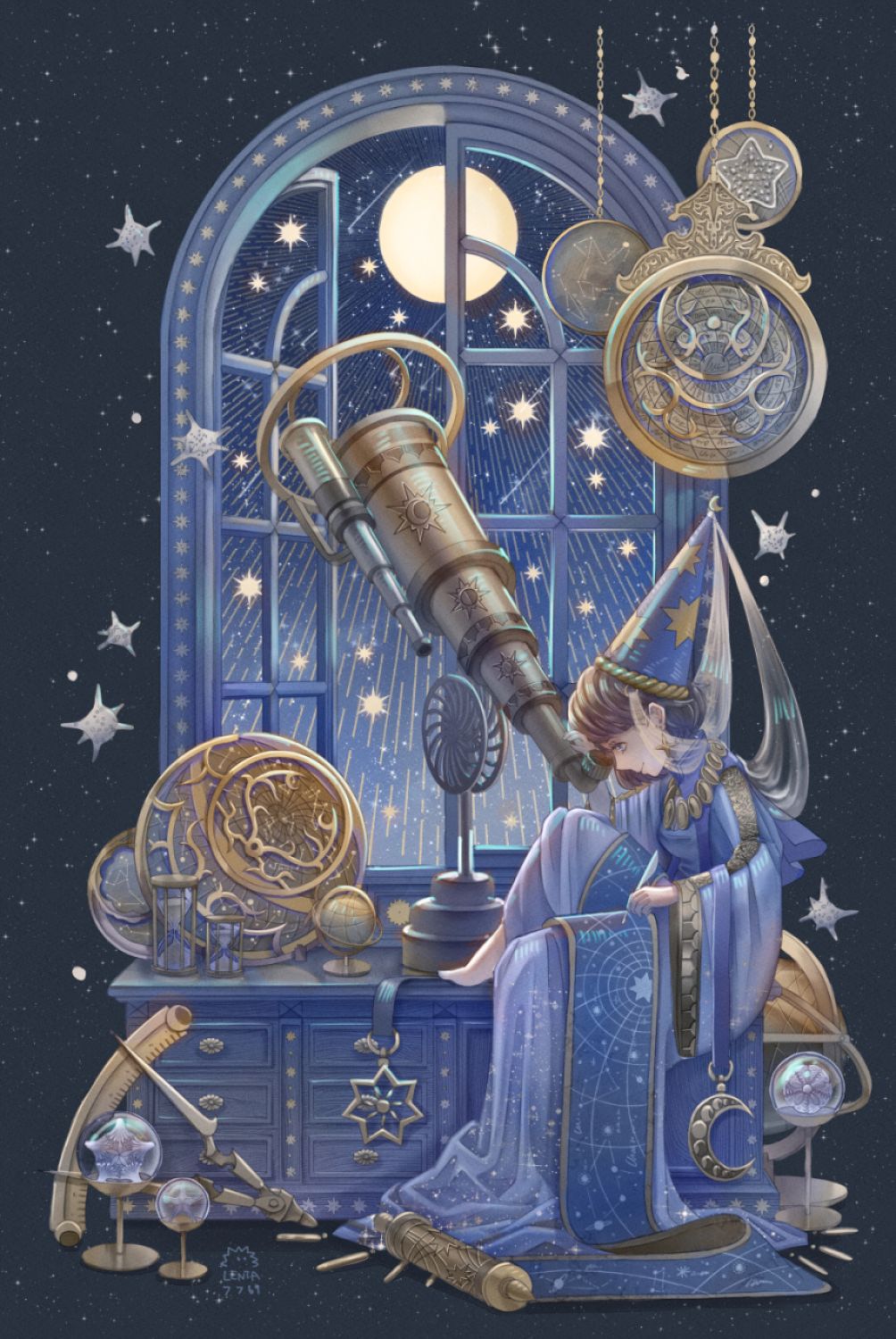
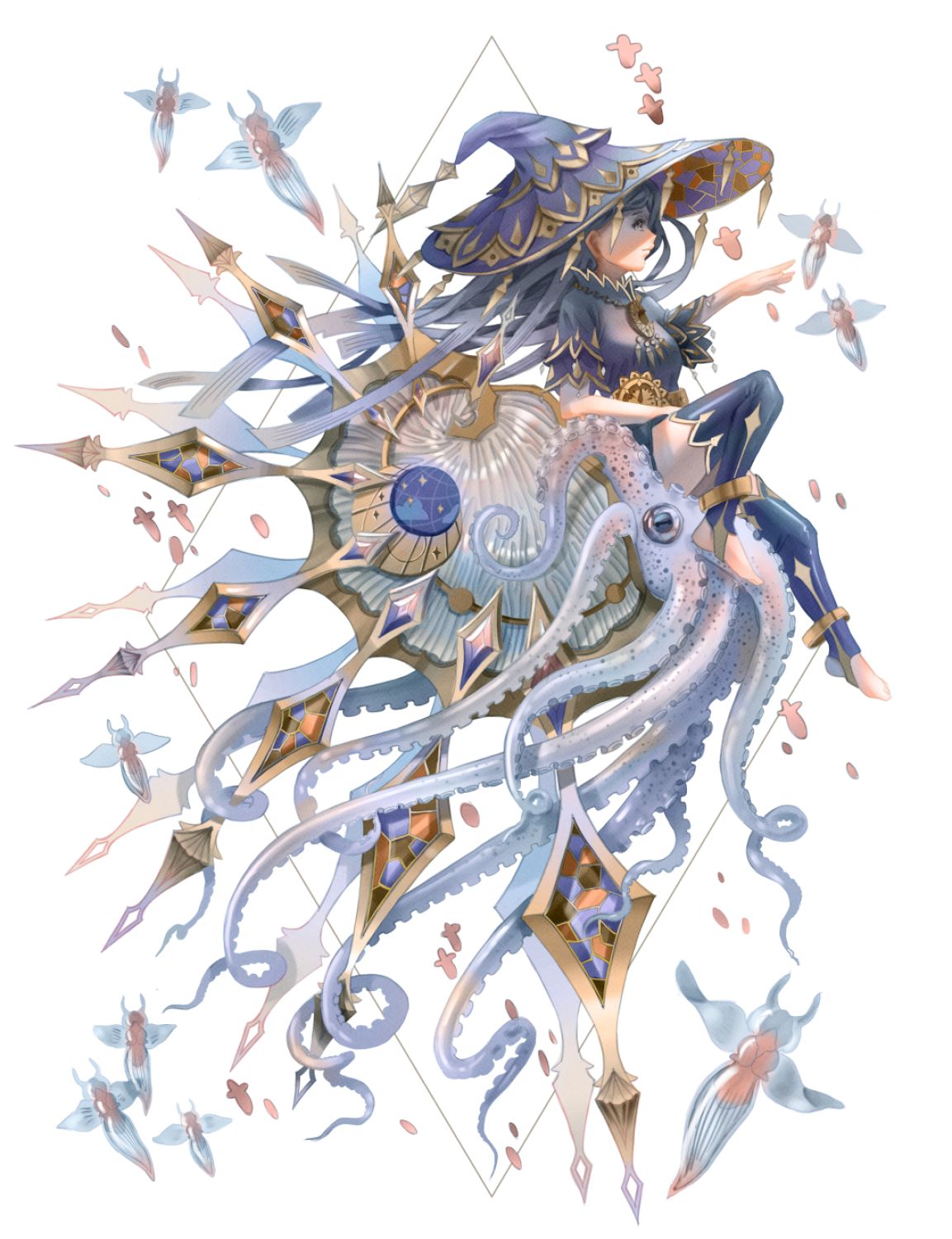
Cartography of the Starry Sky

Come to think of it, astronomical instruments from the past were designed with such grace and elegance. They were so beautifully crafted that, although modern instruments are far more remarkable in both design and the precision of their functions, it feels a little sad that the intricate patterns and ornamental details have gradually become less and less elaborate over time.

Lost in the Crimson Woods

While I was sketching this piece, I suddenly remembered that when I was a child, I had a fantasy art book that I think had quite a significant influence on my work today.

The book was The Second Earth: The Pentateuch by Patrick Woodrooffe. I can’t seem to find it anymore, so it may have been lost when I moved house, or perhaps it simply disappeared somewhere along the way. But I still vaguely remember how beautifully and mysteriously the landscapes in the book were designed and depicted. Just looking at the images was enough to spark an incredible amount of imagination.

And I really had to rely on my imagination back then, because I was still very young and couldn’t read English at all.

As I’m writing this, I actually went and checked the prices for the book on eBay… and I can’t help thinking that I really should have taken better care of that book.

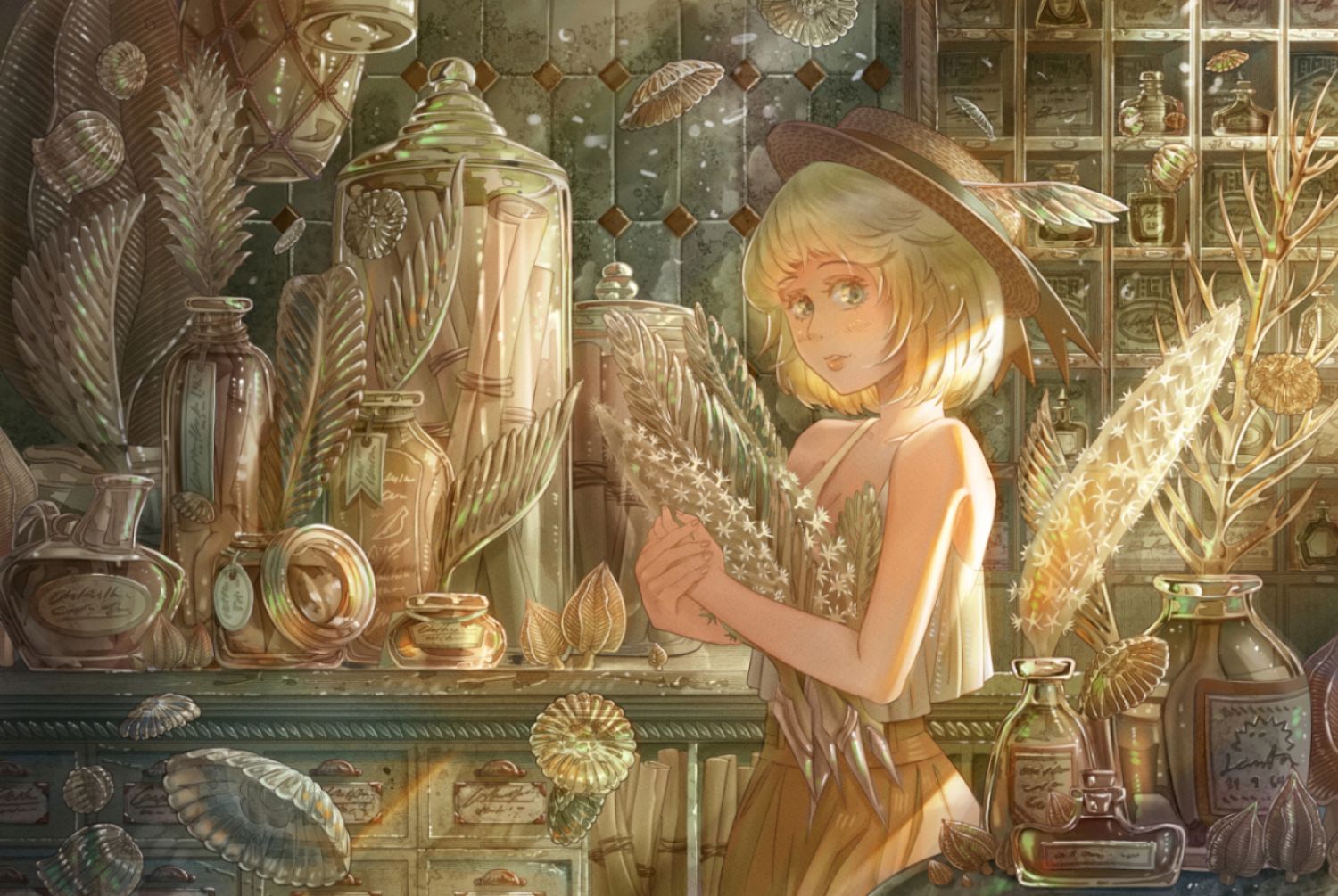
Prehistorical Stationary

I used to think that Charnia, this strange and fascinating prehistoric life form, was an ancestor of the sea pens we see today because of how remarkably similar their forms are.

But in the end, the Charnia group went completely extinct, leaving no descendants behind to carry on its distinctive characteristics. I can’t help but wonder how different the landscapes of our oceans might be today if Charnia had somehow survived all the way to the present.

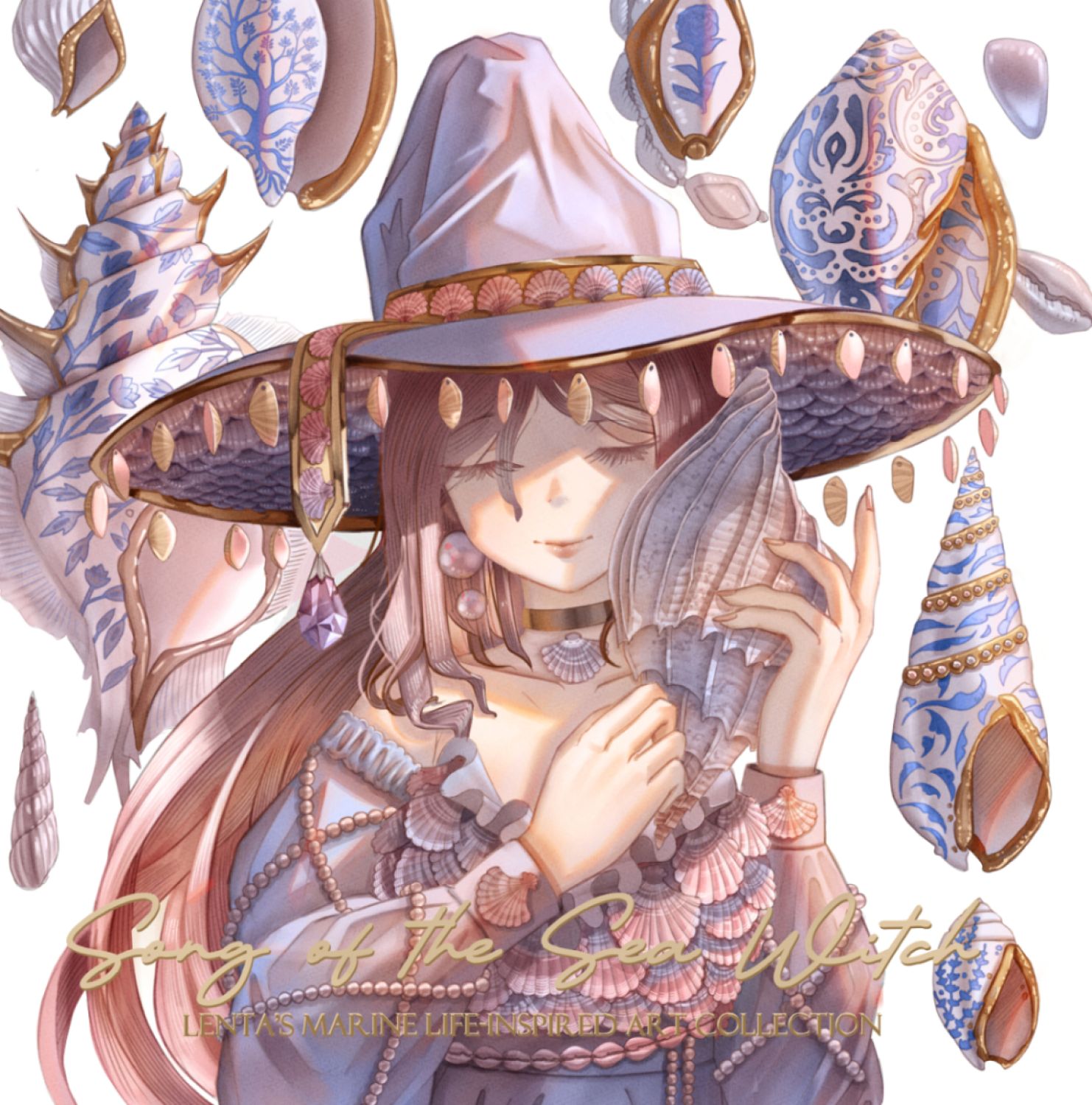
Songs Of The Sea Witch

In the Ocean Continent, a distant land where more than seventy percent of the earth is covered by vast expanses of deep blue water stretching beyond the horizon, lies beneath those beautiful waters a prosperous kingdom—the realm of an intelligent and powerful race: the merfolk.

Merfolk are half-human beings bound to the waves and the currents of the sea. Their bodies shimmer with jewel-like scales; some adorn themselves with exquisitely crafted pearl shells, while others resemble the humans of the land, yet possess the wondrous ability to breathe beneath the water. Their long lifespans allow them to live at an unhurried pace, embracing a life filled with gentleness and quiet delight.

Beneath the veil of sapphire waves, they have built intricate architecture: radiant coral temples, marble palaces carved and adorned with copper, and cities that glow faintly like moonlight beneath the sea. Along every path a traveler takes, something new awaits whether a beauty that inspires wonder, or a mystery that stirs the deepest fears.

And this is where the story begins, in the depths of the Ocean Continent a hidden kingdom where dreams and curses lie concealed within the same realm.

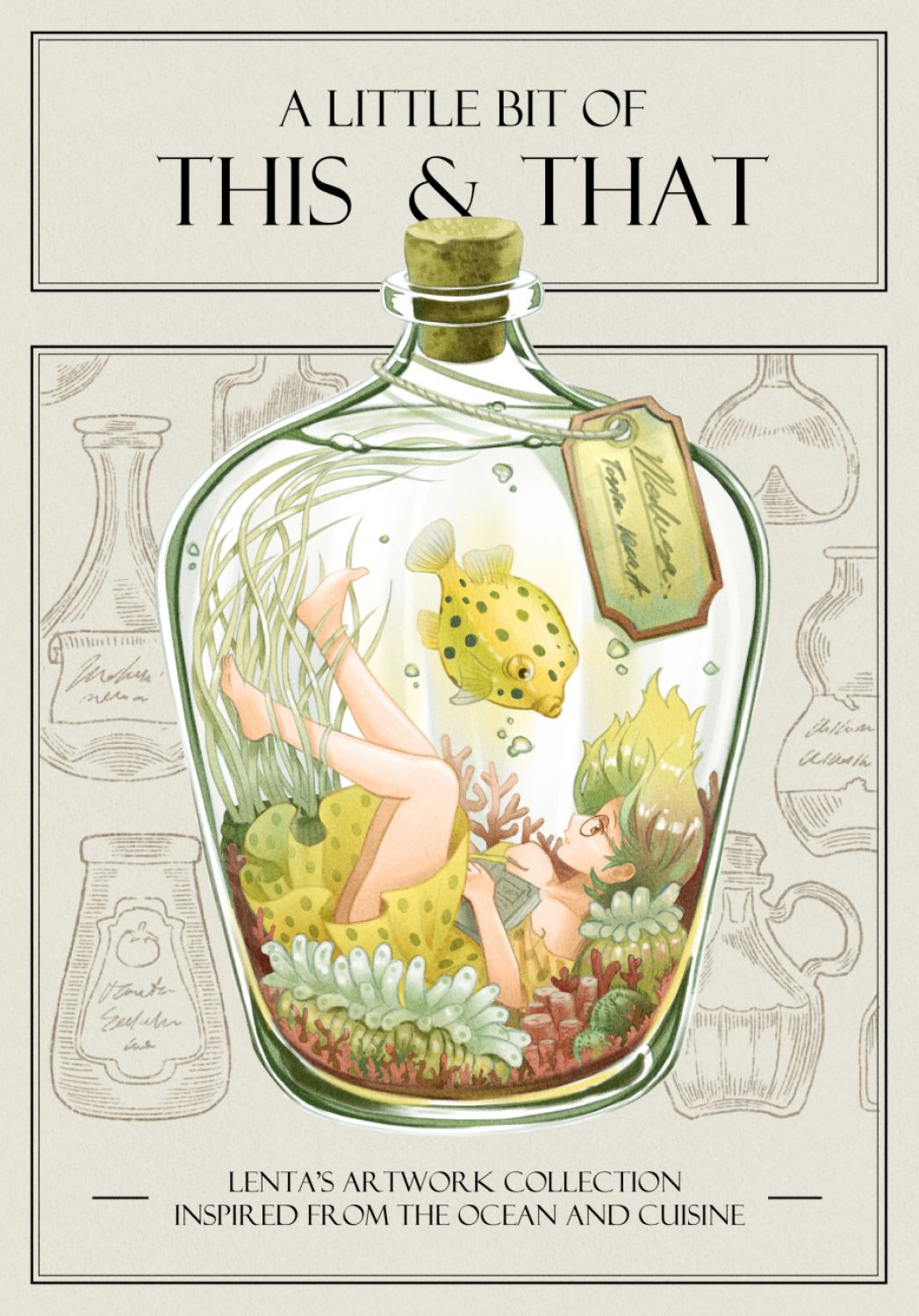
A Little Bit of This and That

When I was a child, I grew up watching a series of marine-life documentaries on VHS. The documentaries featured a pair of male and female hosts who would take us on journeys through various underwater habitats, describing and discussing what they encountered with such lively enthusiasm. Even now, I can still vividly remember the melody of the opening theme and the sight of sunlight shimmering across the waves at the beginning of each episode.

As I grew a little older, being someone who loved going to the sea, I would often spend hours exploring rocky shores at low tide, searching for small creatures hiding in tide pools or beneath the rocks. I also loved putting on a snorkel and diving into the shallow waters to explore the coral reefs.

It was only as I entered middle age that I began to realize that the underwater world I remembered from my childhood had almost completely faded away. The loss of biodiversity was heartbreaking. The coastal reefs that had once been so beautiful had now become little more than fields of dead coral, with only a small amount of living coral remaining.

I created this body of work with the desire to preserve everything as it once was—to hold on to those moments from long ago, even though I know deep down that, by now, it may already be too late to turn things back.

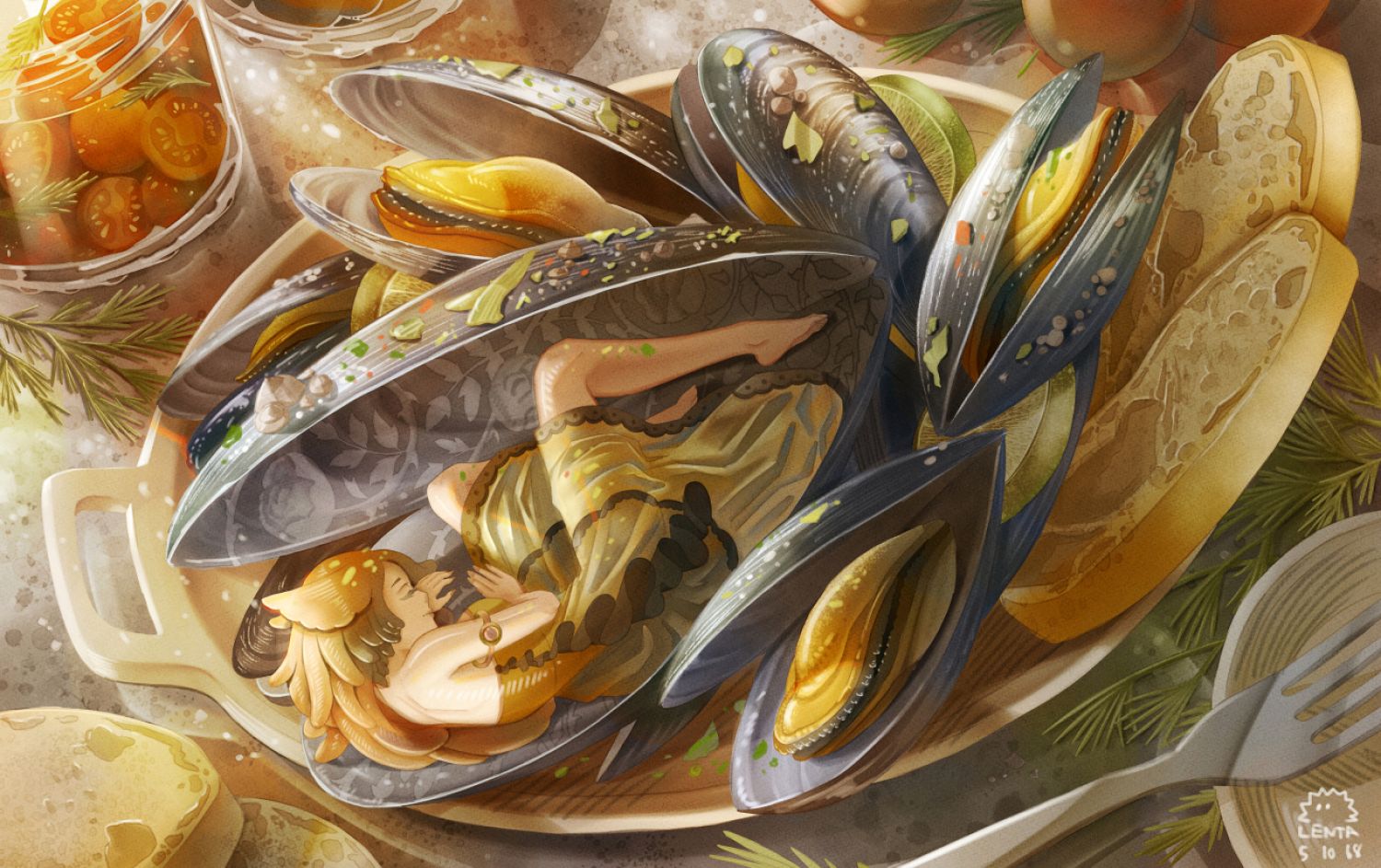
Autumn mussels

Back when I used to buy mussels from the flea market to cook at home, they would always come in all sorts of sizes — big and small — as you’d expect from a market that doesn’t really fuss over sorting them. When I saw the biggest mussel lying there in the pot with its shell wide open, I couldn’t help thinking, “Looks like you’ve been luckier than your friends for quite a while, huh?”